Flower Power
Capstone Team Design | Hybrid Concentrator Photovoltaic-Thermal Receiver
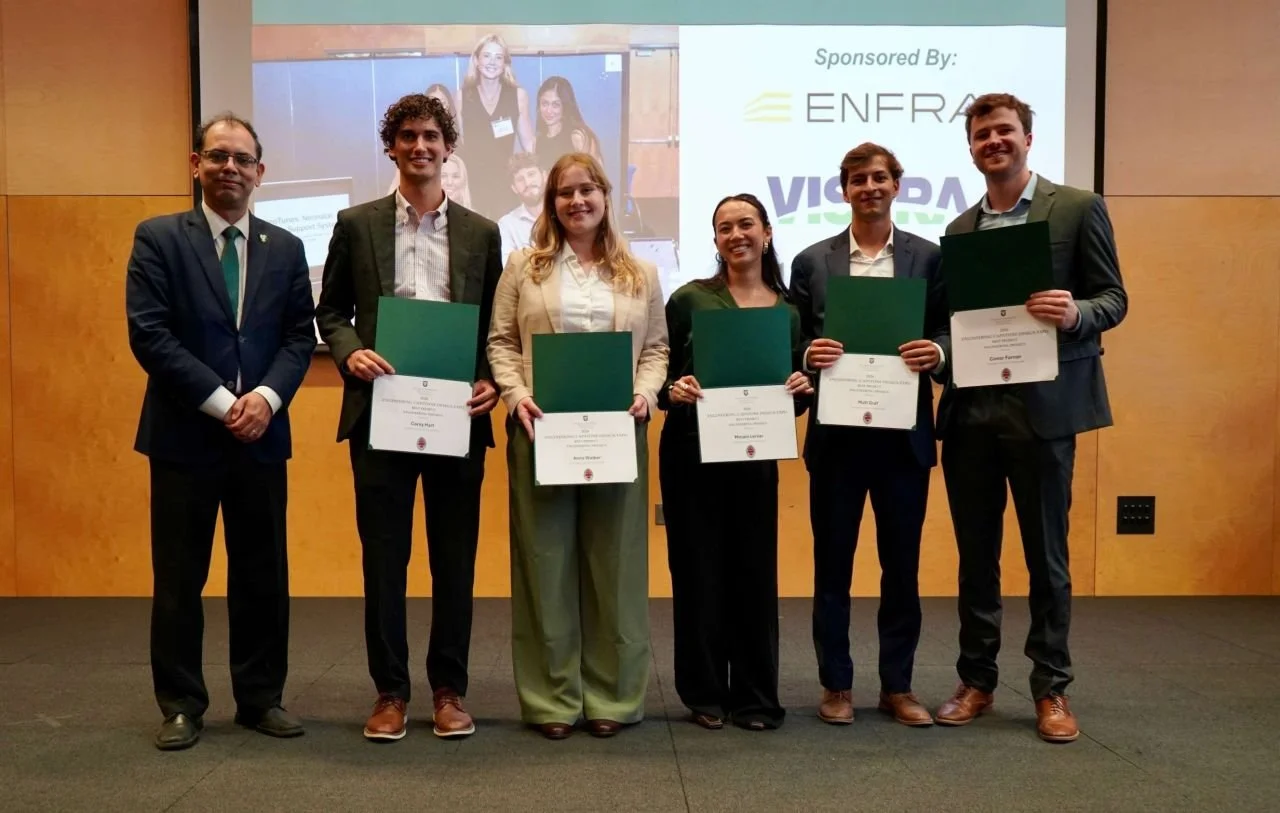
For my senior year team design capstone project, I was the thermal lead on Flower Power: Solar Cogeneration, an ongoing project under the Escarra Photonic Materials and Devices Lab. The project has been in development for several years now, and we got to work on it during the pilot phase. Our team ended up winning Best Project in Engineering Physics at the Annual Senior Engineering Design Expo!
Check out our article feature to learn more: https://sse.tulane.edu/turning-sunlight-power-and-heat


Why a Hybrid Solar Concentrator?
Current solar energy solutions are inefficient and waste a lot of thermal energy. Typical panel solar cells sit at an efficiency of around 23%, while concentrating solar systems sit at up to 35%. By using a concentrator solar design and. highly efficient solar cells in tandem with thermal energy generation, we can optimize our design to have a projected efficiency of 72%.
The Design
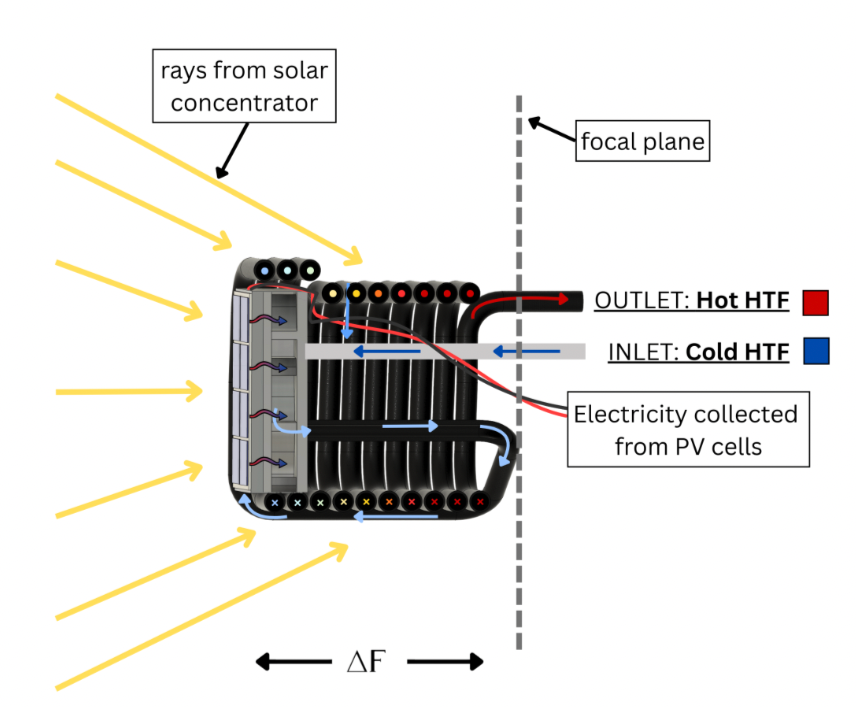
The design of the sunflower receiver is based around a large parabolic mirror that reflects sunlight onto the receiver arm. On the receiver sits the photovoltaic cell array on top of a cooling block, on top of the thermal coil. The cooling block is a milled piece of aluminum, with a designed microfluidic channel. The thermal coil is a copper coil, twisted around an aluminum mandrel, and painted black. Cool, pressurized water is sent into the cooling block, cooling down the solar cells and helping them retain maximum efficiency, and the pre-heated water is sent into the thermal coil, where it is intensely heated up by the sun.
My Work!
As the Thermal Lead working in the reiterate and redesign phase of the project, I had two main focuses.
The manufacturing process of the thermal receiver
The COMSOL simulations
I rebuilt multiple new thermal coils for the SFR3 pilot design, as well as improved the manufacturing process itself. The thermal coil consists of an aluminum mandrel and a the copper coil. The copper coil was tricky to form by hand, requiring a vice clamp, pipe benders, and some hand bending to get it to form correctly. I redesigned the manufacturing process of the receiver, focusing on making jigs for replicability, accuracy, and general ease.
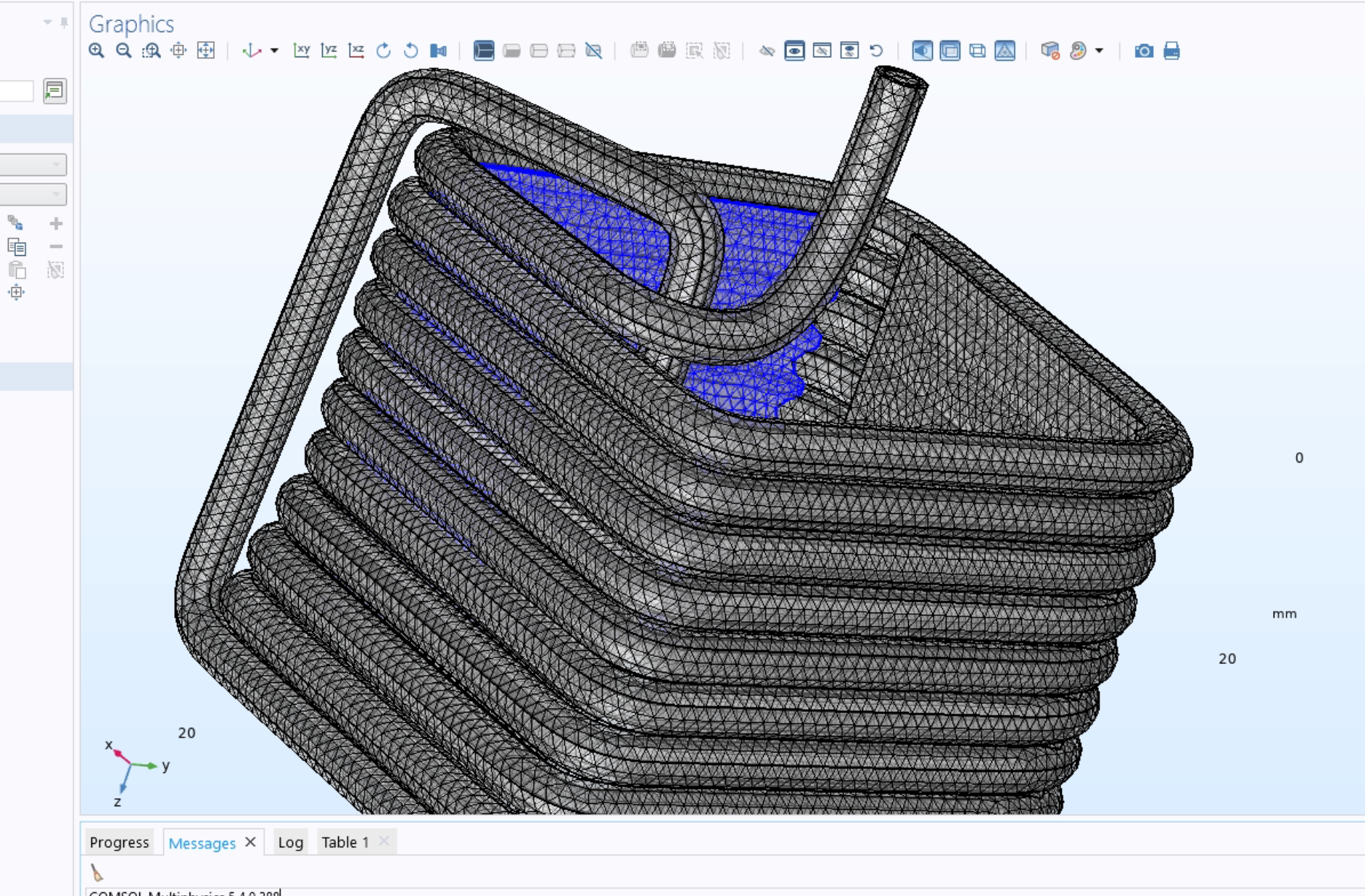
We used COMSOL multiphysics to run simulations of the thermal receiver, focusing on estimating the temperature of the water through the coil when under full sunlight. We have not had a functioning thermal coil simulation for the last 2 years of the project, mainly due to meshing issues, so I rebuilt the CAD and simulation from the ground up. My simulation will prove vital for the system integration phase of the project, as we will need theoretical data to accurately assess and improve our device.
In addition to these responsibilities, I had many opportunities to work with my team members and see my work in action. Whether that was installing a new thermal receiver on the arm, going up to the roof to check something out, or collecting thermal data, it was a great project to work on with a great team.
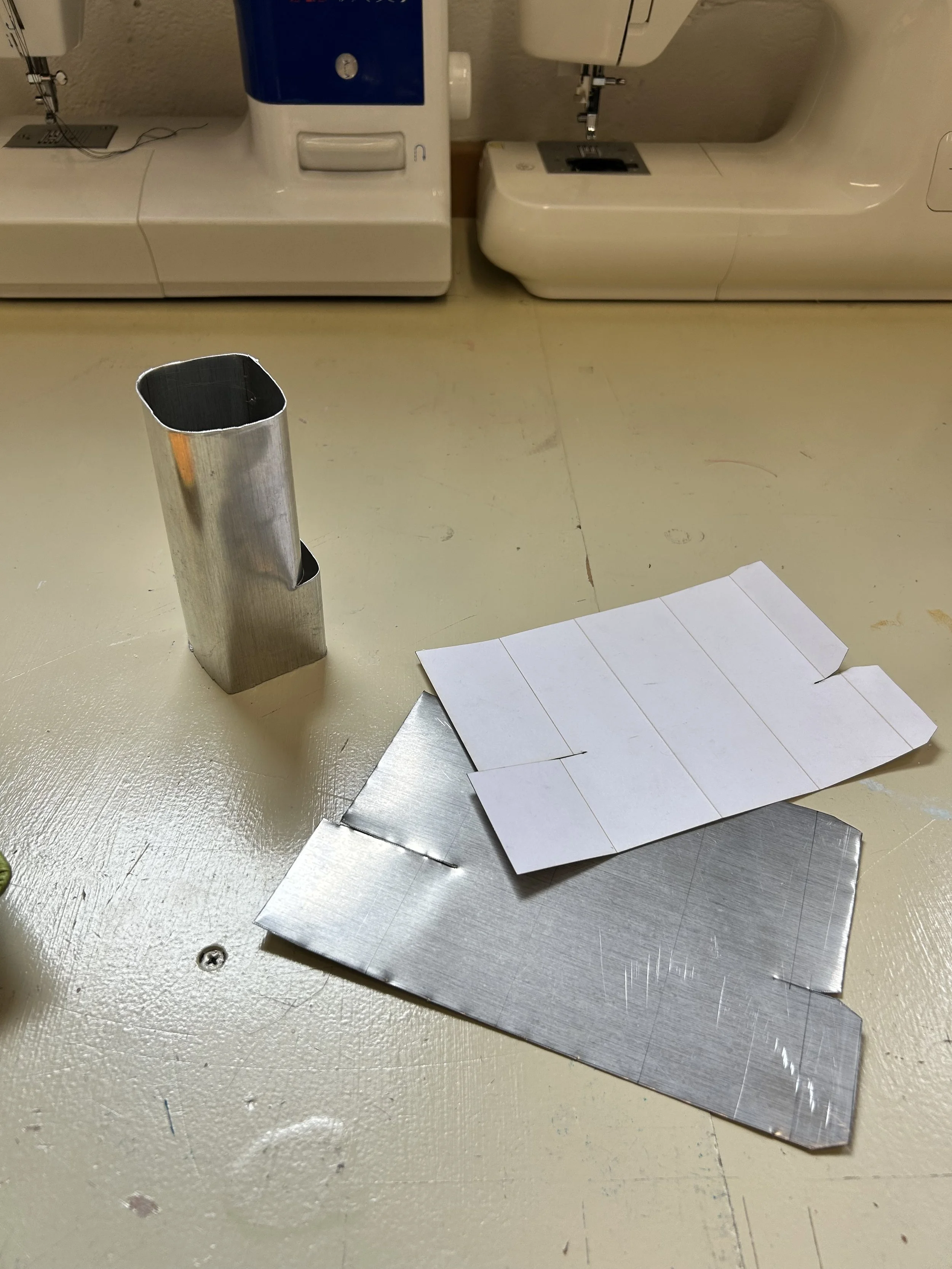
Process of hand-making the mandrel – this stencil is laser cut onto cardstock, traced, and then bended accordingly
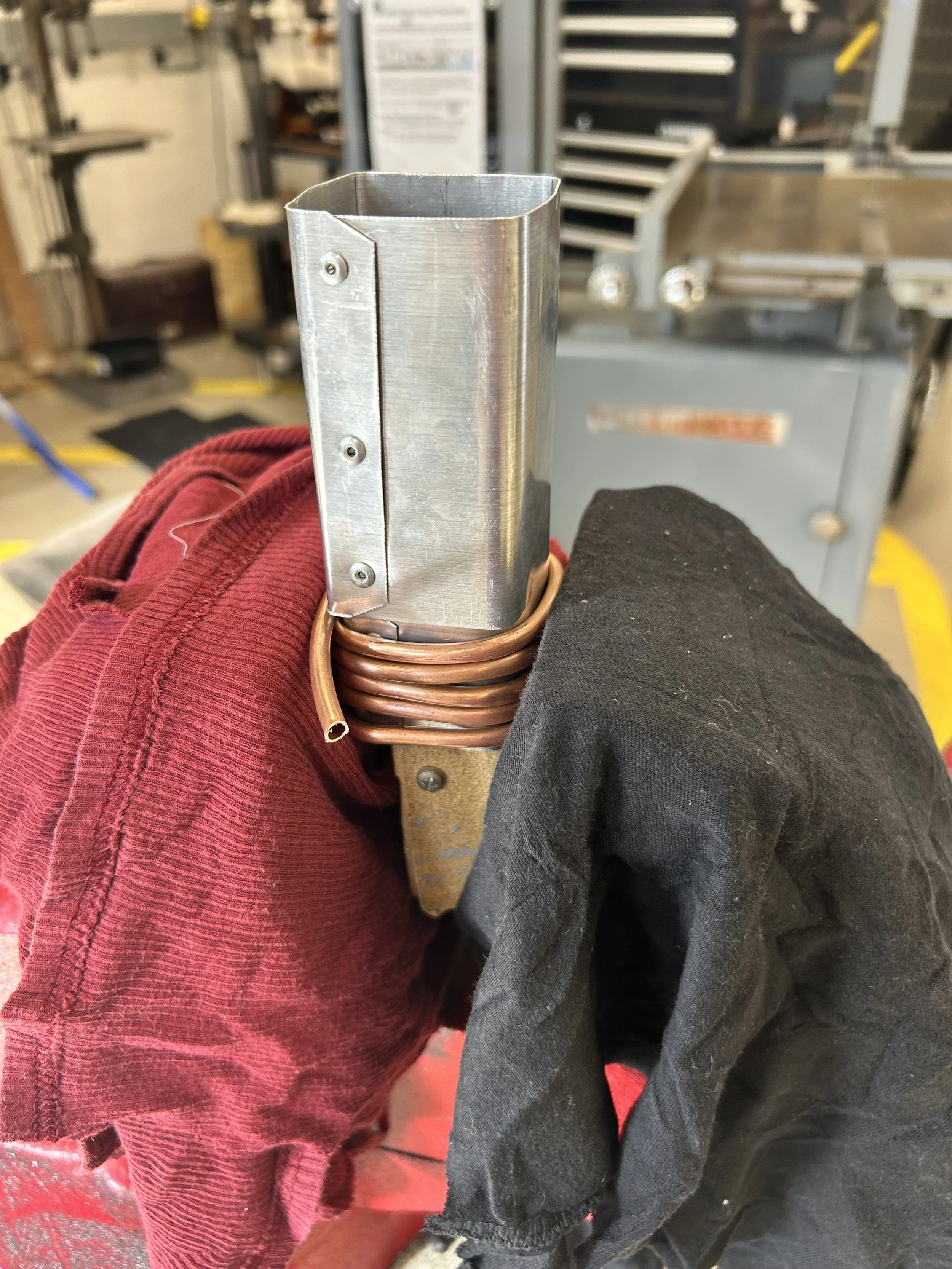
The process of bending the coil! A vice clamp is used to hold the whole thing in place, as well as ensuring the first 3 loops are wrapped extremely tightly
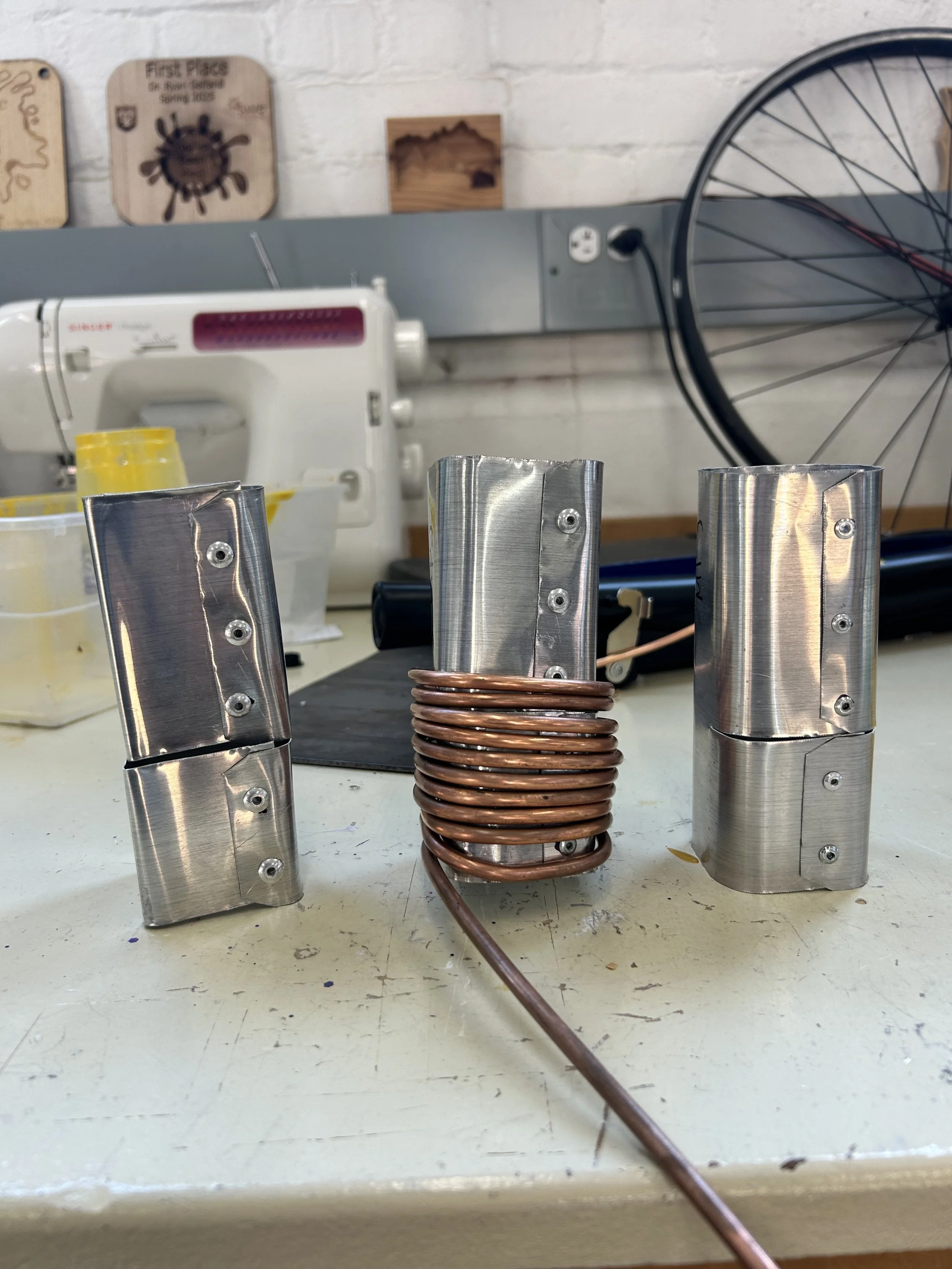
A comparison of one of my first mandrels to one of my later
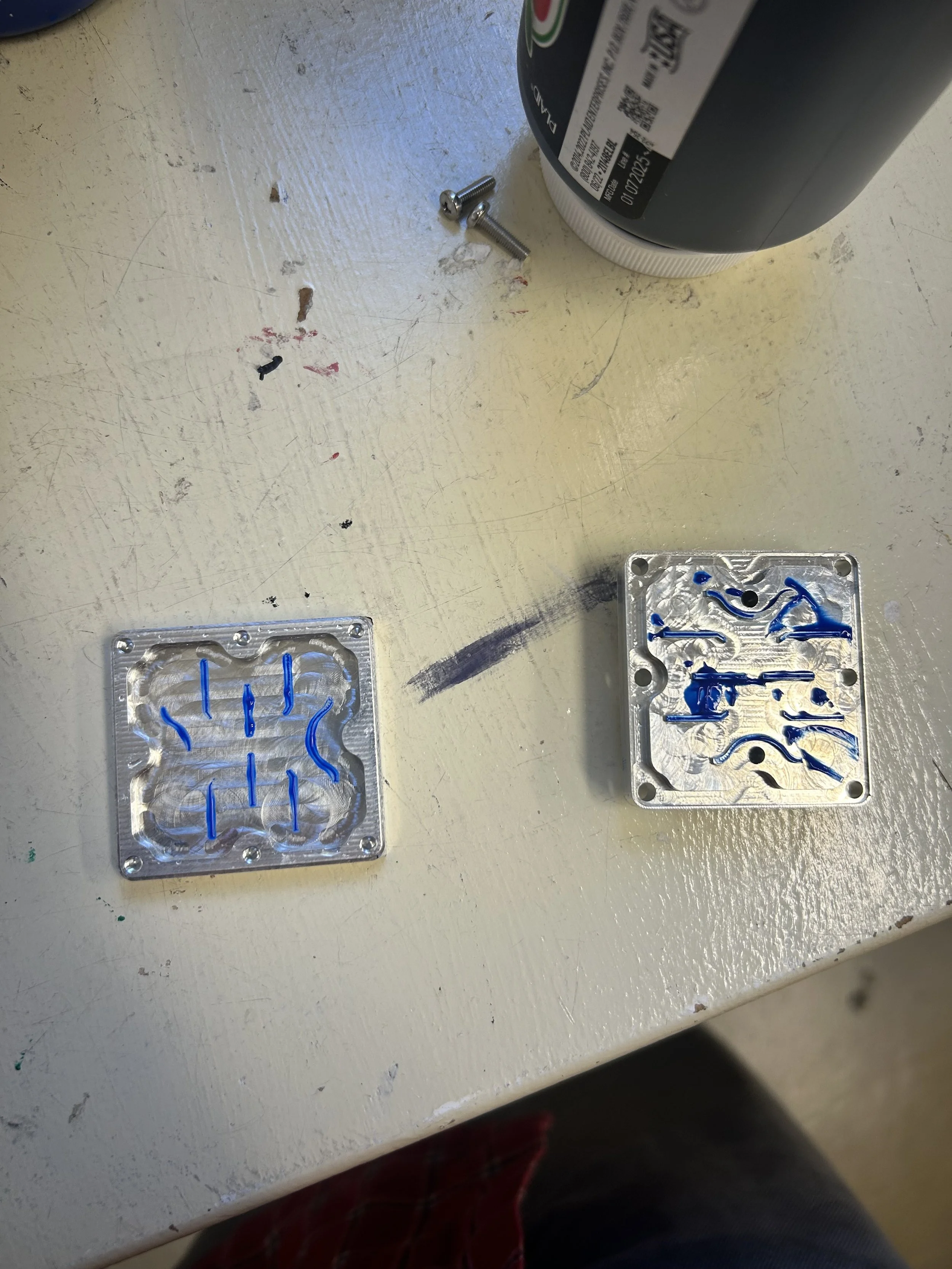
Machined aluminum cooling block
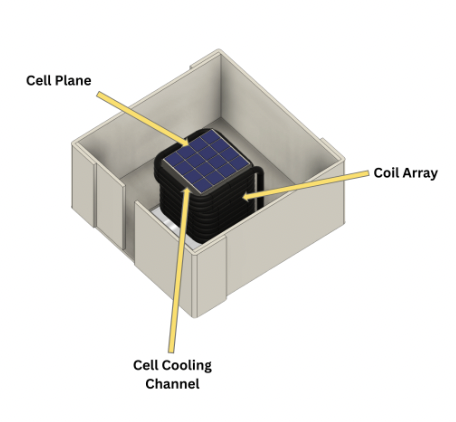
Diagram of the end of the receiver arm
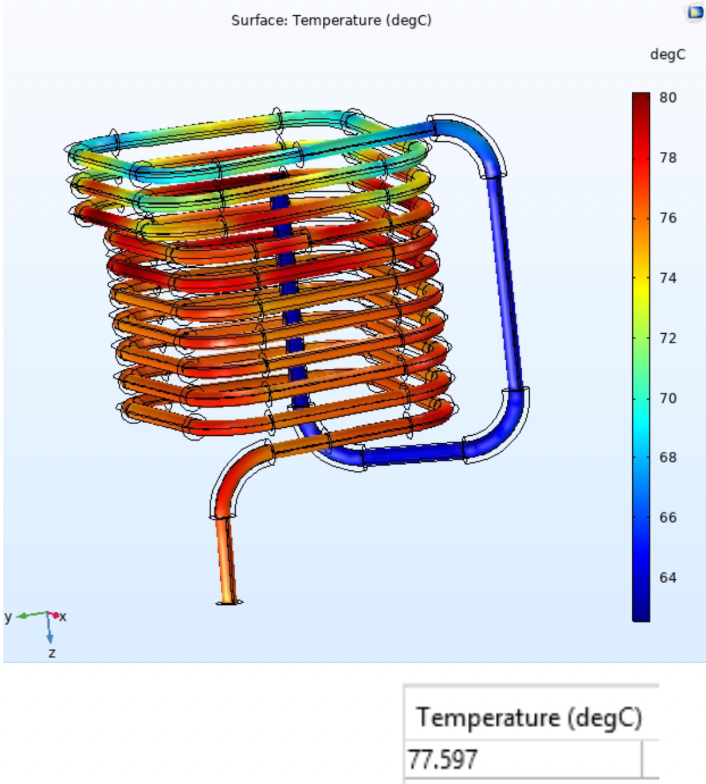
COMSOL Multiphysics temperature map solution of the copper coil